Why I Left Painting and Drawing
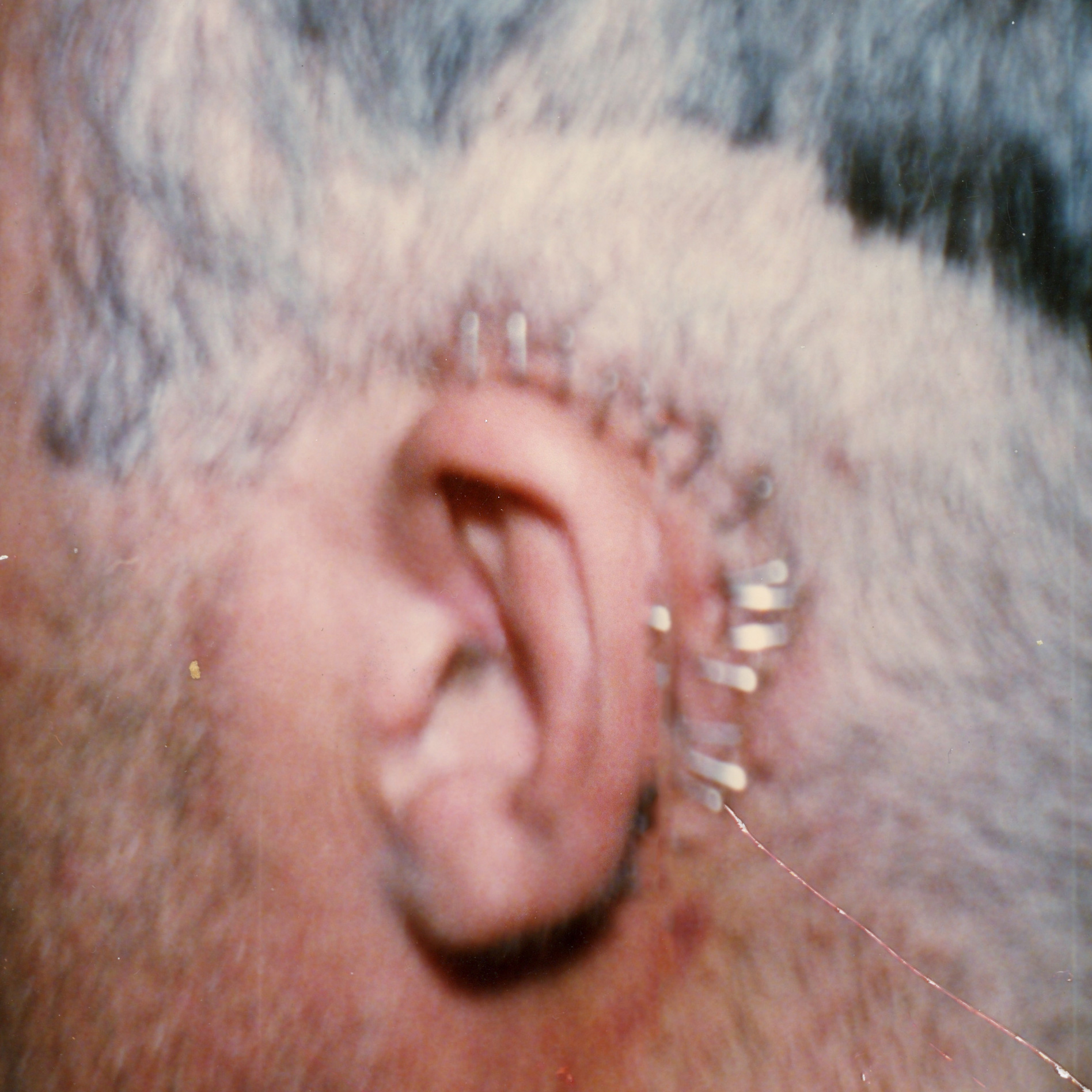
acousticNeuroma 1996
— or perhaps more accurately, how painting and drawing left me.
When I gave up pre-med to pursue a career in art, I thought I was being practical by majoring in Art History and Classical Archaeology at UC Berkeley. At first, everything went according to plan. I graduated with Great Distinction and was accepted into Berkeley’s prestigious Ph.D. program, one of the best in the country. I was elated. Academia seemed like a promising future. But reality set in quickly. I lacked the maturity, and frankly, the political savvy required to navigate that world. I was unprepared for the competitive and often cutthroat nature of academic life. Within a few months, I realized I wasn’t cut out for it. I left the program after a year, devastated and feeling like a failure.
After taking a year off to regroup, I turned my attention to illustration, a new direction that felt more grounded and tangible. I had no formal art training and wasn’t sure I had the talent. But as luck would have it, my in-laws lived just down the street from Art Center College of Design when it was still in Hancock Park. I didn’t have a portfolio, but they allowed me to take night classes to build one. Apparently, I did have some talent after all. After three semesters, I was accepted into the full-time program just as the school moved to its new Pasadena campus in 1976.
I was on track to graduate in 1979 when my first marriage ended unexpectedly. With only one semester left, I had to face the real world and start earning a living. I began freelancing as an illustrator and graphic designer in Los Angeles. I survived, but I didn’t love it. I hated it, actually. Airbrush illustration paid the bills, but it was a grind: constant deadlines, endless revisions, and long delays just to deliver a fifteen-minute change across town. This was before email, before digital workflows. It was a business, and I lacked the temperament, and the interest, to treat it that way. Most of all, I hated being told what to make.
Life shifted again when my second wife, a student at PCC, introduced me to one of her instructors, who took an interest in my work. Soon, I began assisting him in his studio and substituting in his classes. To my surprise, I loved teaching. It was a career path I had never considered. In 1983, I took my portfolio to Cal State Long Beach and Northridge to inquire about adjunct positions. To my amazement, both schools offered me courses. For the next five years, I taught consistently and found deep fulfillment in the classroom.
In 1985, with my wife’s encouragement, I returned to Art Center to pursue an MFA, something I had long resisted, haunted by my earlier experience at Berkeley. But this time was different. This time, I was doing it for myself. It turned out to be one of the most transformative and joyful periods of my life. I entered the program with strong traditional skills in drawing and painting, but I found myself captivated by the ideas and practices of conceptual art. My mentors encouraged exploration and risk. By the end of my first semester, I saw no reason to keep painting or drawing. My work shifted toward sculpture and installation—and I’ve never looked back.
I’ve now spent more than thirty-five years making art, mostly conceptual and often unconventional. There have been highs and lows, mostly lows if I’m honest, but I’ve never lost my passion. After receiving my MFA, I was hired full-time at a community college, largely for my background in illustration and design. Even though I no longer painted or drew for myself, I continued to do so occasionally in service of my students.
Each path I’ve taken has served to inform the next. Being able to draw has always been a necessary means to an end. I have never enjoyed the act of drawing itself, drawing or painting never gave me the joy or satisfaction it does for many traditional artists. But it served me well as a teacher. Many call me a generalist, but my background in art history, illustration and design, and conceptual art has served my students well and taken my own work in directions I would have never imagined had I not experienced these diverse areas of art and art-making.
Not long after I started teaching full-time at Cerritos in 1988, the digital revolution began. Adobe Illustrator had just been released, soon followed by Photoshop, 3D modeling tools, and eventually web design. It was a seismic shift. Graphic design and illustration would never be the same.
Fortunately, I’ve always been a lifelong learner, and I took to the new technology like a fish to water. Many of my colleagues struggled to adapt, but I embraced it wholeheartedly. Over time, traditional drawing skills became less essential, at least in the digital realm. But that’s not really why I stopped drawing.
In 1995, during a routine post-surgical recovery from cancer, a follow-up scan revealed a 4.25 cm acoustic neuroma, a benign brain tumor. Though not an emergency, surgery was scheduled for after the spring semester. The operation lasted ten hours, and I suffered a stroke during the procedure.
I spent the next month in the hospital, relearning how to walk and slowly regaining fine motor skills in my left hand, my dominant hand. When I returned to teaching, I didn’t tell anyone I could no longer draw. Thankfully, most of my classes now focused on computer graphics, where traditional skills weren’t necessary.
Over the next several years, I gradually recovered and returned to drawing once again out of necessity. The financial crisis hit our college hard. I was offered a summer drawing class to teach, so I worked assiduously to regain my drawing skills. These efforts paid off. My drawing skills returned. I now draw differently than before, more expressively, but I was successful. Once again, each path I’ve taken has helped inform the next.
Physically, I could have returned to drawing and painting for my own work. But by then, I had lost the desire. My work had evolved conceptually; it no longer required those traditional tools. And so, in a quiet but profound way, painting and drawing left me.
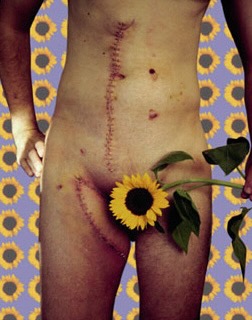
Dermatofibrosarcoma Protuberans 1994-5