Domestic Memories
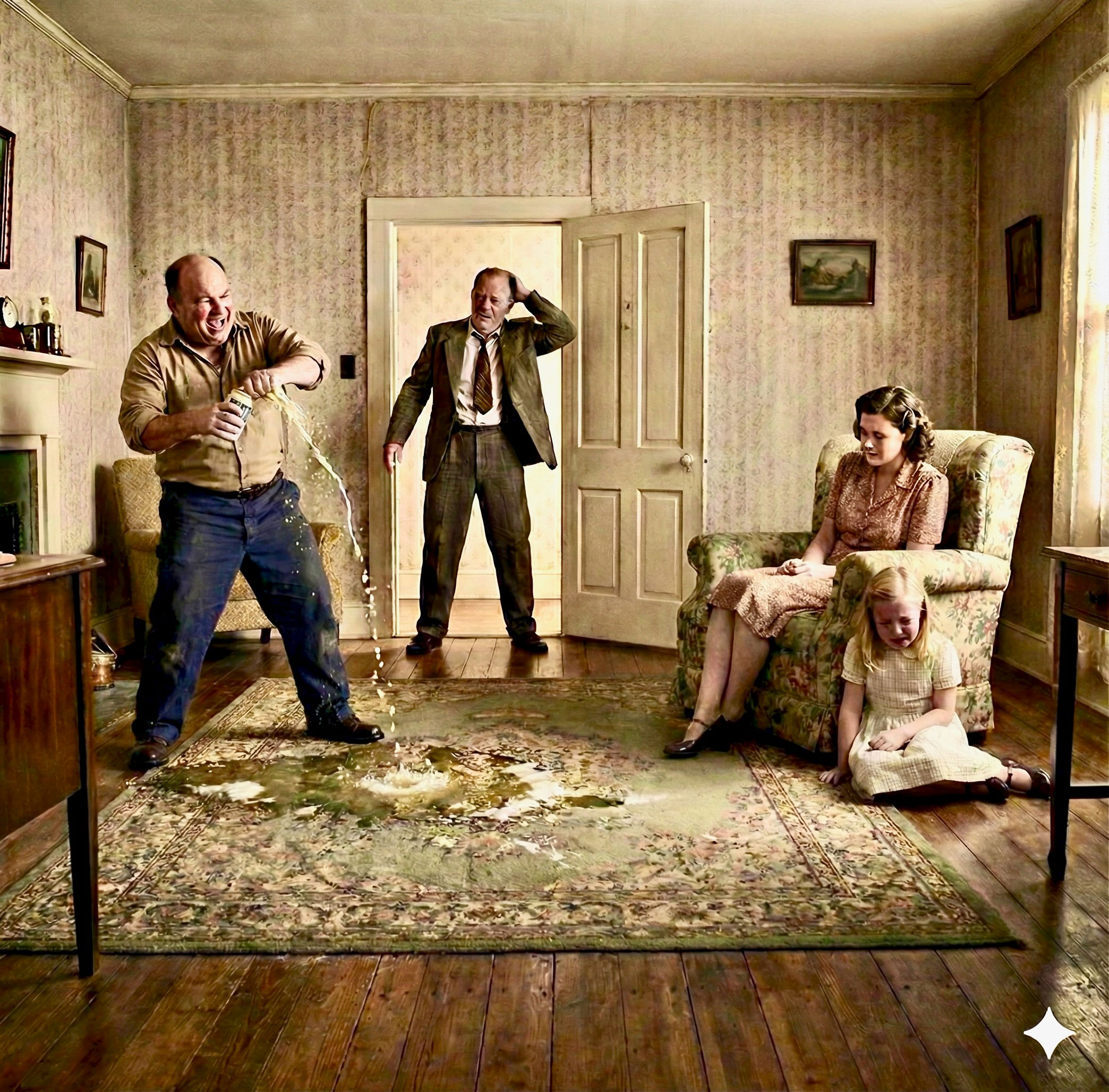
elsieAndIrene AI
My creative process always begins with something personal—a family sketch, an old photograph, or a story I grew up with. I’m drawn to how memory evolves over time, how something imagined or drawn decades ago can take on new life when interpreted through today’s tools.
I move fluidly between digital and physical materials transforming my grandmother’s 1930s drawings into photographs, plastic, or casting new objects in bronze. I’m fascinated by that blend of old and new, real and imagined. For me, it’s a way to reconnect with the people and moments that shaped me, while also questioning what’s real, what’s remembered, and what’s invented.
Many people document their lives through photographs or journals. My grandmother, Elsie Flippen, chose instead to record family experiences during the 1930s and 1940s through sketches each carefully captioned to preserve the memory of an event. These hundred-plus drawings, spanning about a decade, form an intimate visual narrative of her life. They are memories told through Elsie’s perspective, occasionally embellished, as storytellers often do. Perhaps her early years in Belfast, Ireland, nurtured her gift for spinning vivid tales.
Photography is often seen as the most accurate form of documentation, yet Elsie’s sketches capture something photographs cannot. Some drawings are technically refined, others less so, but all tell stories far richer and more personal than any snapshot could.
The subjects of her sketches revolve around the struggles of the Great Depression and the challenges of World War II. The central figures, her husband Carl, a Los Angeles fireman; her daughter (and my mother) Irene; and Elsie herself, were recurring characters in these stories.
I received these drawings unexpectedly one Christmas. My mother had inherited them after Elsie’s death and kept them stored away for over a decade. I hadn’t even known the sketchbook existed. Many of the drawings likely stirred difficult memories for my mother, especially since Carl’s drinking and their social escapades were frequent subjects.
For reasons I can’t fully explain, I feel deeply connected to my grandmother through these sketches. As I transform her drawings into AI-generated photographs, I often imagine what it must have been like to witness the scenes she depicted. My grandparents and mother are long gone, so those conversations can’t happen, but I would give anything to travel back in time, to be a “fly on the wall, ” and see these moments unfold.
Elsie may never have had formal art training, yet her instinct for storytelling makes her work profoundly engaging. My mother must have sensed that I would be the right caretaker for the sketchbook. Since receiving it, I have created a book to preserve the drawings, and now, through AI, I am reinterpreting them in a new form.
Trained as a traditional illustrator, I’ve always been fascinated by how technology shapes art-making. The digital revolution of the late 1980s, ushered in by tools like Adobe Illustrator and Photoshop, transformed commercial and fine art alike. Now, with AI systems like ChatGPT and Gemini, we’re entering another sweeping chapter in that evolution.
On a whim, I revisited Elsie’s sketches using AI, crafting short prompts to see how the technology would reinterpret them. The results were astonishing, realistic photographic renderings that still carried a trace of illustration. Gemini in particular amazed me with its attention to historical detail and ability to evoke the atmosphere of the era. The resulting images feel both theatrical and cinematic, qualities that echo Elsie’s own storytelling flair.
These images are not restorations but re-imaginings. They show how visuals can survive, change, and be reborn across time. Each photograph feels discovered rather than made, as if it arrived from the future rather than the past. AI interprets Elsie’s sketches through a contemporary visual language, collapsing the distance between past and present. What emerges is not a clear historical record but a blurred blend of memory, imagination, and invention.
My intention is not to present factual history but to evoke the feeling of remembering something recorded long ago. These images exist between documentation and dream, emotionally true but uncertain. That uncertainty, that oscillation between presence and absence, lies at the heart of the work. The project becomes an act of imaginative repair, rebuilding family memory through empathy and speculation rather than fact.
The machine brings its own kind of longing to the process. Trained on vast archives of images, it tries to recreate intimacy without truly understanding it. It fills in the gaps through learned patterns, revealing both the possibilities and the limitations of digital memory. The AI does not know my grandmother or her family, yet it helps give form to what is missing. These images don’t recover the past, they expose its absences.
Elsie worked with almost nothing. I work with an abundance of technology. Yet we both share a single aim: to remember, and to resist being forgotten. Her pencil and my algorithm serve parallel purposes, each trying to make visible what might otherwise disappear.
Through this process, I am not merely recreating history but continuing a conversation that began decades ago. What started in graphite now emerges in pixels. Together, my grandmother’s sketches and my AI-generated images form a continuous thread, a family album that never existed. It is built not on evidence, but on imagination, inheritance, and the enduring human desire to see what cannot be fully remembered.
I’ll never know exactly what was in Elsie’s mind when she created her sketches, but through this dialogue between pencil and pixel, between memory and machine, I can get as close as possible without a time machine. Her drawings were never meant as objective records; they were expressions of how she experienced her world. And now, nearly a century later, that world continues to live and evolve through mine.
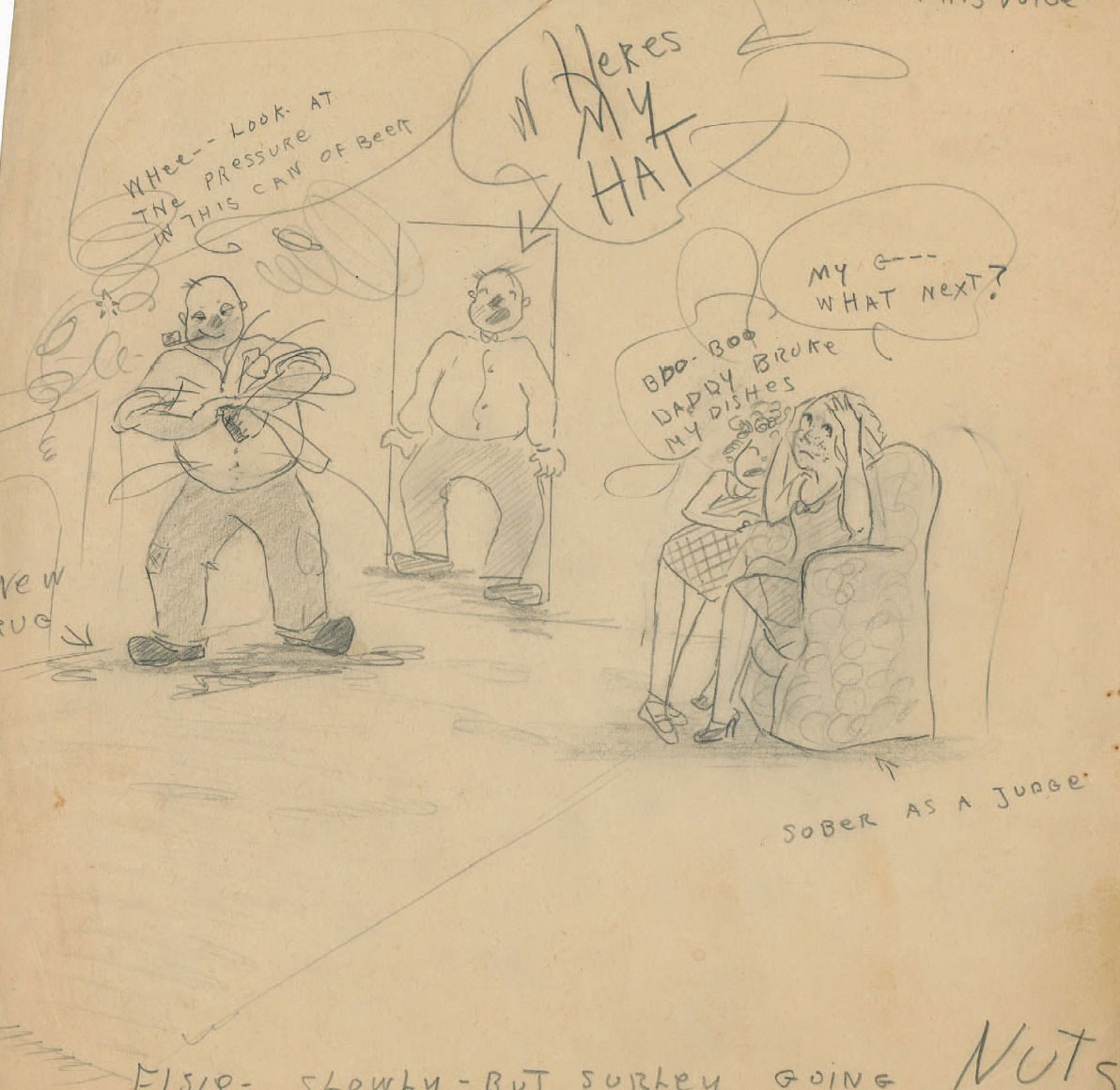
Elsie's Sketches